TL;DR
Tree roots are one of the most common causes of recurring blocked drains in Manchester’s leafier suburbs, where mature street trees and established gardens sit close to Victorian-era clay pipework. Roots don’t grow through solid pipe — they find their way in through a small crack, a loose joint or a gap around an old pipe connection, then expand until the pipe fails completely. Didsbury and Chorlton, with their tree-lined avenues and larger gardens, see this more often than newer-build parts of the city, and a blockage that keeps coming back is usually the giveaway. If your drains clear temporarily but block again within weeks, request a fixed-price quote online rather than repeating the same short-term fix.
How Tree Roots Actually Get Into a Drain
A tree root can’t force its way through solid, intact pipe. What actually happens is that roots are drawn toward the moisture and nutrients inside a drain, and they exploit an existing weakness — a hairline crack in ageing clay pipe, a joint that has moved slightly out of alignment, or a gap where a pipe was poorly connected in the first place. Once a fine root finds its way in, it thickens over months and years, and the pressure of that growth widens the original crack, lets more roots in, and eventually restricts or completely blocks the flow through the pipe. It’s a slow process, which is exactly why it tends to catch residents out — by the time it’s obvious, the damage underground is usually well established.
It’s also worth being clear about what root ingress isn’t. A root growing near a drain in good condition, with tight, intact joints, generally can’t get in at all — the pipe itself has to already be compromised, even in a small way, for it to become a route in. That’s why two neighbouring gardens with similarly sized trees can have very different histories: one has a drain run with a weak joint or an old crack, and the other doesn’t.
Why Didsbury and Chorlton See More of It
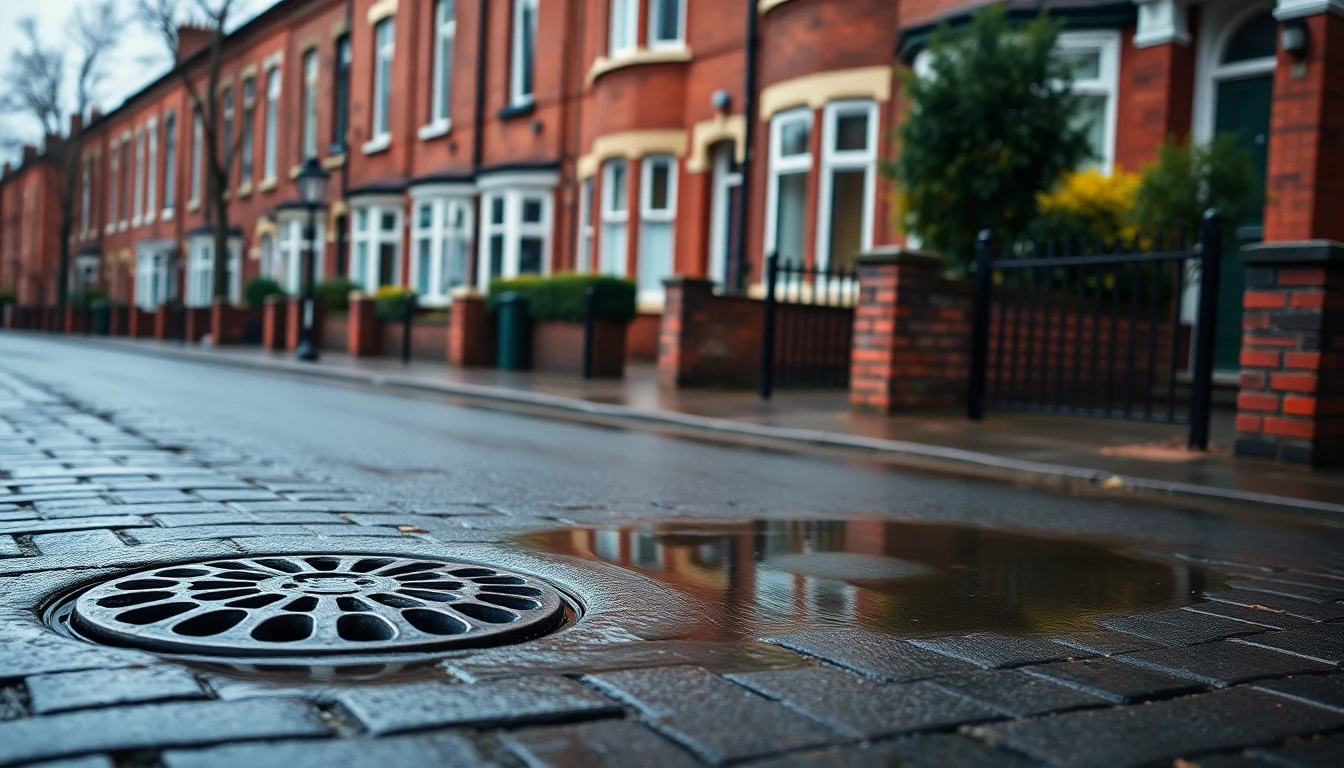
Both Didsbury and Chorlton are known for mature street trees, established gardens and larger plots than you’d find in more recently built parts of Greater Manchester — all sitting above the same generation of glazed clay drainage pipework common across the city’s Victorian and Edwardian streets. More roots close to more joints and more cracks means a straightforward statistical likelihood of ingress, and it’s compounded by front gardens and driveways that have been paved or built over since the original drains were laid, changing where roots naturally spread in search of water.
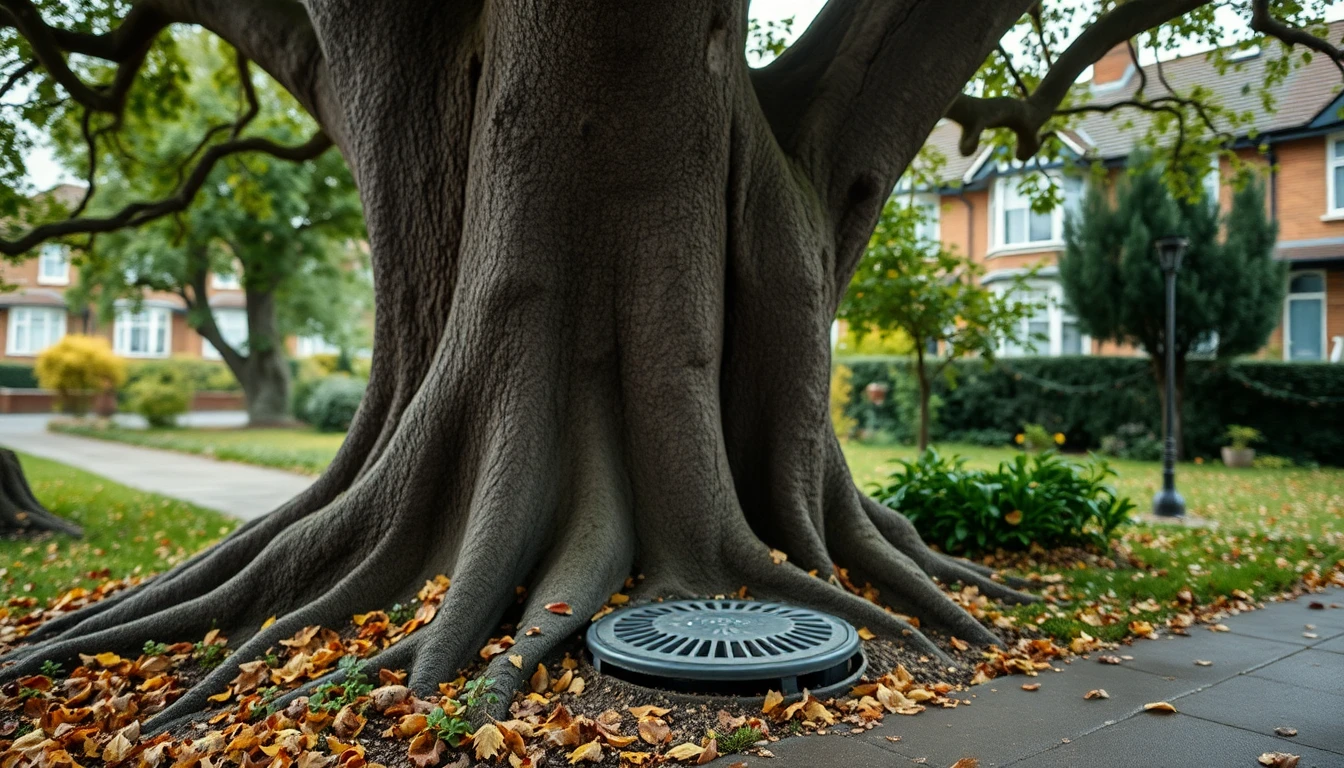
Species matters too. Larger, thirstier trees — the kind commonly planted as street trees or found in mature back gardens across both areas — tend to send roots further and more aggressively in search of a reliable water source than smaller ornamental varieties. A drain run sitting within a tree’s root spread, even several metres from the trunk, is within reach over enough years, particularly during drier summer spells when a tree’s roots are actively searching for moisture and a leaking or slightly damaged drain becomes an obvious target.
Signs It’s Roots, Not Just an Ordinary Blockage
An ordinary blockage from grease, wipes or hair usually clears completely once it’s cleared and doesn’t return for months. Root ingress behaves differently: the same drain blocks again within weeks, often gradually rather than all at once, and it may only affect one run of pipe rather than the whole system. Gardens directly above the drain run can also show clues — an unusually lush strip of grass, or a slight dip in the lawn where a section of pipe has been compromised by root pressure underneath it.
Getting an Accurate Diagnosis
Because root ingress and a simple soft blockage can look similar from inside the house, a CCTV drain survey is the most reliable way to confirm what’s actually happening underground: how far the roots have spread, how many points of entry there are, and whether the pipe itself has been structurally damaged rather than just partially blocked.
Clearing Roots Without Guesswork
Once roots are confirmed, our root removal service uses mechanical cutting to clear the pipe bore without excavating the garden in most cases, followed by an assessment of the damaged section so you know whether it needs ongoing monitoring or a more permanent repair. It’s a different job to a standard blockage clearance, which is exactly why getting the diagnosis right first matters — clearing the symptom without addressing the root (literally) just buys you a few more weeks.
Cutting the roots back doesn’t repair the original crack or joint that let them in, and unless that entry point is dealt with, the same section of pipe stays vulnerable to regrowth. That’s why the assessment step matters as much as the clearance itself: it tells you whether you’re looking at an occasional maintenance job or a section of pipe that would benefit from a more permanent lining or repair.
Recurring Blockage? Get to the Root of It
If a drain in Didsbury, Chorlton or nearby Sale keeps blocking no matter how often it’s cleared, roots are worth ruling in or out before you pay for the same short-term fix twice. Request a fixed-price quote online and we’ll start with a proper survey rather than another rod down the pipe.